
Why Anxiety Feels Physical – The Body Signs That You Should Know

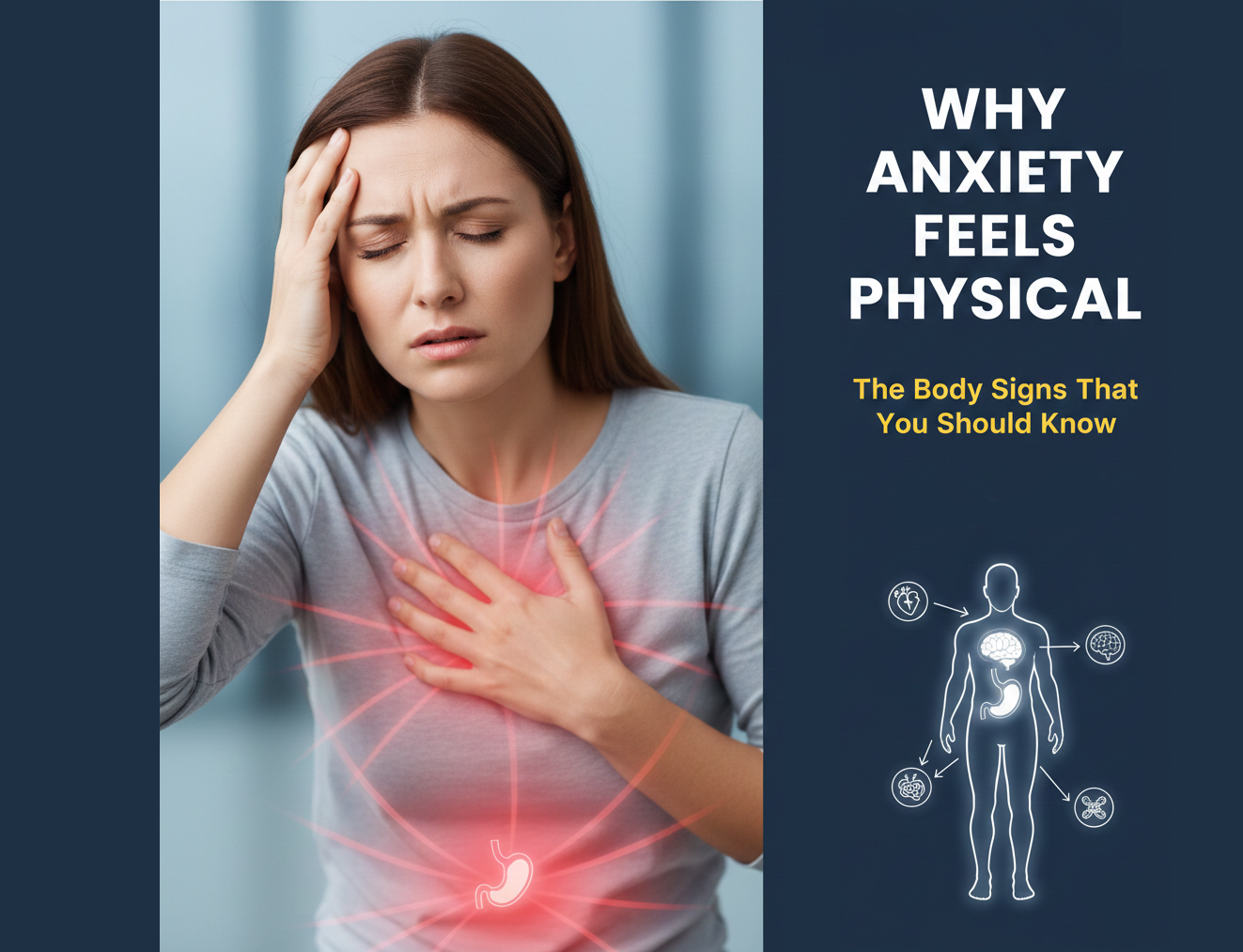
The majority believes that anxiety resides in the mind: thoughts that are running in circles, worry that does not end and a sense of unease that just cannot be eliminated. However, in many cases, anxiety does not go through the mind, but it begins within the body. You can feel a tension in your shoulders rather than thoughts running in your mind more. You change your breathing and you are not aware of it. The problem named Sleep is long since it falls apart.When you finally realize you are anxious, the body has already done all the work.
Do you why this Happens?
The nervous system does not understand logic. It prepares the body when it perceives danger either actual or perceived. Muscles tighten. Breathing shifts. Digestion slows. Heart rate changes. This does not need any conscious fear. The response of the body is automatic.
These reactions cease to be temporal when stress is frequent. They settle in. What could have been a quick response is now a background condition, and thus symptoms that have to do with anxiety make them appear physical and not emotional.Individuals are seeking solutions in the scans, tests, and blood work. In case of normal results, frustration builds up. Symptoms do not disappear because their cause is not properly understood.
Physical Symptoms of Anxiety that People Often Overlook.
- Anxiety does not appear dramatic. It often hides in plain sight.
- Tensed feature of muscles which never relaxes.
- Shoulders stay lifted. The neck feels stiff. The mouth is tightened with no effort. Exercising helps temporarily, and the tightness is regained.
- Breathing that feels off .Breaths shall be shallow, or heavy in the chest. You experience like you are unable to take any deep breath despite the oxygen being normal. This feeling is enough to cause further anxiety.
- Pain in the chest or chest tightness. Not sharp pain, but pressure. Heaviness. Awareness of the heartbeat. This tends to put individuals in panic since it is serious.
- Digestive changes – Bloating. Nausea. Irregular appetite. Pain that occurs in the stomach, which is intermittent and lacks a definite pattern.
- Lightheaded or dizziness. Especially when under stress or having been exposed to a lot of tension. It occurs when balance is upset by the breathing patterns and muscle tension.
- Normal-appearing but sleep which is not refreshing. You can sleep many hours but upon waking up, you are tired. The nervous system is partially awake even when one is resting due to anxiety.
These symptoms are not always separate, and they may co-exist. A symptom may prevail over the rest being minor.
Why Ignoring These Signs Makes Things Worse
The body adapts quickly. Once tension induced by anxiety becomes a normal status, then the nervous system takes as the new status quo. Muscles stay tight. Sleep stays light. The levels of stress hormones are high.In the long run, this condition is energy consuming and debilitating. Minor problems become larger. Recovery takes longer. Mood shifts. Controllable stress transforms to chronic pain.When one ignores the signs, they do not diminish; it is a lesson to the body to retain them.
Practical Solutions that Work.
There is no single fix. Anxiety can best be answered by gradual modifications as opposed to radical transformations.
Recreating breathing patterns.
The slow and slower breathing is an indicator of safety to the nervous system. It tells the body that it no longer has to deal with the threat.
Reducing physical tension naturally
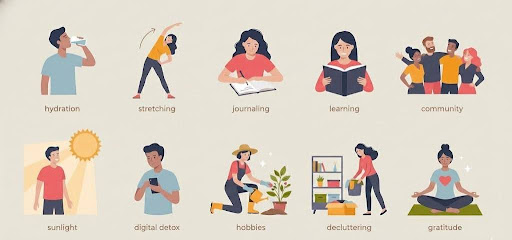
Gentle movement. Stretching is concerned with the neck, shoulders, and hips. No heavy training, only little exercise and relaxing.
Establishing proper schedule
Uncertainty is the doom of anxiety. The consistent intervals of sleep and meals provide the nervous system with the structure that it can rely on.
Limiting stimulants
Alcohol and some supplements elevate the activity of the nervous system. Physical symptoms tend to be reduced by reduction more often than anticipated.
Addressing sleep directly
Rest is not non-obligatory sleep. The symptoms of anxiety tend to decrease without any other intervention when nighttime habits are improved.
These steps are usually the first ones used by doctors since they do not only alter the symptoms but also the baseline response of the body.
Natural Methods of Calming a Nervous System.
Natural solutions do not have shortcuts. They work quietly, over time.
The time in the light will enable to reset the stress hormones. Body aerobics like walking outside do not over stimulate muscle. The mindful breathing reduces the arousal of the body in the presence of busy thinking. Cutting down at night on the amount of exposure to screens allows the nervous system to naturally slow down.
These are small actions, but their impact compounds.
Daily Habits That Make a Real Difference
- You must not have an ideal routine. You need a consistent one.
- Always try to wake up without haste in the morning.
- Maintain regular food intake to prevent stress induced drop in blood sugar.
- Move your body at least once per day.
- Take time to breathe slowly during the tense situations.
- Sleep protection through predictable evenings.
- Anxiety is receptive to repetition. It is by experience that the nervous system learns to be safe, not being explained how to be safe.
Real Relief at your Doorstep
In other cases, the change of lifestyle may not suffice. In case anxiety has a severe impact on everyday life or physical symptoms are still present, the healthcare provider can talk about prescription. This decision is not about weakness. It restores balance. Proper use of medication can calm down the nervous system to allow other measures to be implemented. It is usually short-lived, an element of a larger strategy and not a solution in itself.
Before making any recommendation doctors consider the past, symptom patterns, and general well being. Open communication is this aspect is very important.
Why Education Changes Outcomes.
Being informed about what occurs in your body would make you less scared as it is the root cause of anxiety. Clarity softens it. The faster the nervous system relaxes, the faster people recognize that their physical symptoms are caused by stress, and not dangerous. The realization itself gets into the solution.This is the reason why education is so influential in recovery.
Conclusion
In case you are feeling anxious and that has been presenting itself in your body parts and you do not know where to begin, then visit our Anxiety Wellness Guide. They describe symptoms, patterns, and the ways to manage them in simple language to enable you to talk to medical experts better. To people interested in maintaining a relaxed, sleepy, and balanced life, come to our Wellness Products section. These are alternatives to a more comprehensive wellness strategy, and not an alternative to medical care. You do not need to wait until anxiety gets louder. Listening early makes the path forward clearer.