
Why Pain gets Harder to Control as you age and What You Can do about It

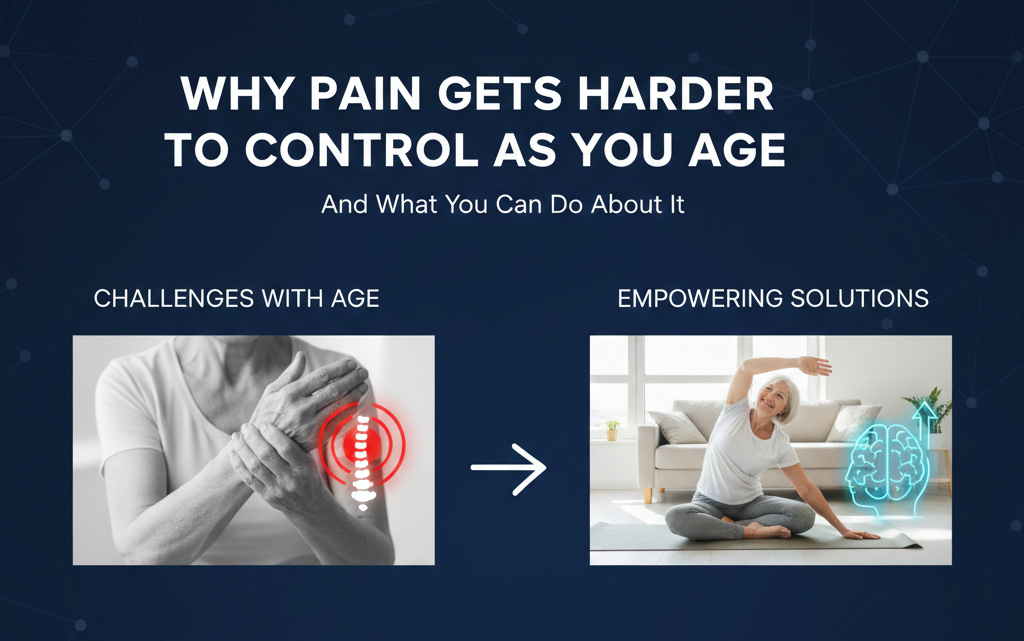
Suffering seldom comes up at night. It is one that develops gradually in years to the extent that people can no longer ignore it. Numerous adults claim that they were able to manage pain previously, but now it does not remain within control. This is a real experience and there are definite medical explanations of it.
The reason behind the growth of pain with age.
The body as it grows old loses its recovery powers.
– Muscles lose flexibility
– Joints wear and tear
– Nerves are sensitized.
– Blood circulation may slow
Due to this fact, a wound that would have healed in a few hours will now take weeks or months. The nervous system in the long run becomes more responsive to pain signals. The pain that was previously another manageable one may be sharper, more profound or more persistent. It is one of the primary reasons why the chronic pain of the geriatric population is so prevalent.
Older adults tend to be disregarded when it comes to chronic pains
A lot of individuals wait to treat in the belief that:
– Pain is a normal part of aging
-More potent pain medication should be shunned.
– It is not that bad enough to visit a doctor.
However, pain is not pain to be. It often grows. Long‑lasting pain can lead to:
– Poor sleep
– Reduced mobility
– Low energy
– Mood changes
– Slower healing
Pain is not just discomfort. It impacts on everyday self-sufficiency and quality of life.
The reason why over-the-counter painkillers fail
The OTC analgesics are used in minor or short-term pain, but they are not always sufficient in:
– Nerve‑related pain
– Post‑surgery pain
– Injury‑related pain
– Prolonged joint or back pain
– Long joint or back pain.
Pain is observed to require more powerful and specific assistance when it appears at some point. This is not to say that pain is uncontrolled. It implies that the nature of pain has been altered. Physicians take this into consideration when they think of prescription pain treatment.
When the pain begins to impact sleep and life
Night-time pain is one of the key indicators that a person requires attention to his/her pain. Pain that:
– Wakes you up at night
– Pains more when you attempt to relax.
– Makes it difficult to get into a comfortable place.
It is often an indication of overstimulation of the nervous system. In a situation where sleep is disturbed by pains, there is no total recovery of the body. This creates a cycle:
– Sleeplessness makes one sensitive to pain.
– Suffers augment anxiety and fatigue.
– Fatigue decreases the pain tolerance.
This cycle is one of the main objectives of pain management among seniors.
The way physicians treat pain in the elderly
Physicians do not only concentrate on the level of pain. They examine the impact of pain in everyday life. They ask:
– Can you move comfortably?
– Are you sleeping properly?
– Does it make it hard to be independent because of pain?
– Is recovery being delayed?
The treatment is typically in stages:
- Movement and lifestyle modifications.
- Exercises or physical therapy.
- Short term drug aid (where necessary)
- Continuous monitoring and modification.
Prescription pain medicines are employed in case of need and in all cases, under supervision.
Pain should not be treated the same way.
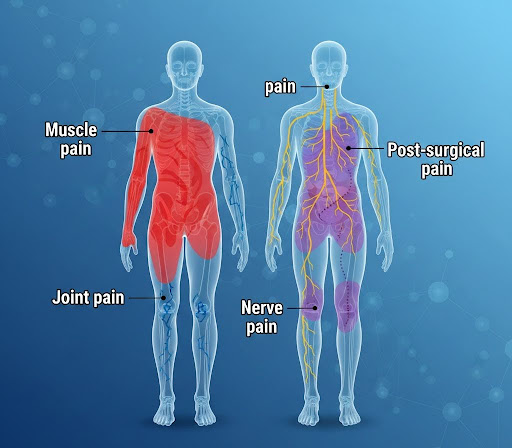
Suffering is of various causes:
– Muscle pain
– Joint pain
– Nerve pain
– Post‑surgical pain
The types have a different response to treatment. This is why a particular medicine can be efficient on a certain individual and not on another. Self-medication may postpone good care and make risks. Medical advice will assist in appropriating the appropriate treatment to the appropriate pain.
The problem of worsening pain by ignoring it
Excessive toleration of pain is counterproductive. When pain is left untreated:
– Muscles lose their strength because of decreased movement.
– Joints become stiffer
– Nervous system pathways of pain become sensitized.
Early treatment often means:
– Lower medication doses
– Shorter treatment duration
– Better long‑term outcomes
Pain management is the idea of aiding recovery, as opposed to covering symptoms.
Pain management in elderly people as a safe option
Tablets are not the only thing about pain management. Doctors often combine:
– Light mobility and positioning.
– Sleep enhancing measures.
– Regulation of stress and nervous system.
– Interim drug assistance on demand.
Drugs aid in recovery. It is not a substitute of in-depth care.
When one should talk to a doctor regarding pain
You ought to seek medical consultation when:
– Pain lasts longer than 2‑3 weeks
– Pain interferes with sleep
– Movement becomes limited
-OTC drugs have lost their efficacy.
– The pain is either persistent or increasing.
Discussion at an early stage makes treatment easier and safer.
Safe purchase of prescription pain medication
When you decide to buy pain medication online, safety is an issue when your doctor has prescribed it. An online pharmacy that is trusted will:
– Need a proper prescription.
– Be licensed and verifiable
– Use secure payment systems
– Present clear delivery and support information.
In case your physician prescribes prescription pain support, then you may order it at a certified online pharmacy with safe checkout and no-discreet delivery.
Final thoughts
Pain is not a sign of weakness. It is a message that a body is in need of support. Pain can also be treated with the right approach, in due time, and with the help of proper guidance, it can be treated and life in everyday life is made easier once again.