
What Is Ambien and How Doctors use it to get sleep

Sleep disorders hardly begin in the night. To the general, insomnia is a gradual accumulation of hours missed through lack of sleep, the nights of poor sleep, the nights of poor sleep, until sleep finally takes a toll on mood, concentration, productivity, and health. By the time a physician talks about Ambien, sleeping problems have long since become more than an inconvenience and require systematic medical intervention.
Ambien is not designed to substitute normal sleep patterns and to cure all sleeping disorders. It is a medical device that is applied selectively by the doctors and it has specific objectives and boundaries. Learning the use and purpose of its prescription will make the patient use it in a responsible and safe way.
This manual discusses what Ambien is, how it functions and how physicians determine when it is appropriate to use as part of a sleep regimen.
Understanding Ambien in Simple Terms
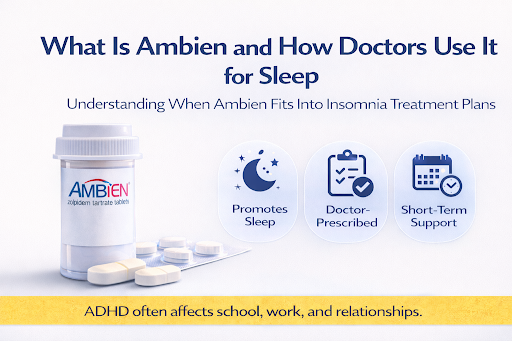
Zolpidem is a prescription drug that is used as an Ambien brand name to treat insomnia, especially to fall asleep. It is a part of the group of drugs usually called non-benzodiazepine sleep aids, or Z-drugs.
Ambien is not a benzodiazepine, and there are different calming mechanisms in the brain, but it operates on the same principle. Its key role is to assist the brain to first enter sleep whereby the normal sleep cues are not functioning effectively.
Ambien is not meant to be a long-term or permanent sleeping solution, but to be used in short-run, or closely monitored.
How Doctors Define Insomnia
Insomnia is not an easy term that doctors would define as a bad night sleep.
Insomnia is a clinically relevant disease when:
- Problem with falling asleep is frequent.
- Sleep disorders do not go away even when one has a sufficient time to sleep.
- Inadequate sleep impacts on daytime functioning.
- Estrangement, sleepiness or loss of focus develop.
Physicians also examine the cause of sleep disturbance. It can be caused by stress, anxiety, pain, disruption of the circadian rhythm, and medical conditions.
How Ambien Works in the Brain
A complicated balance of the wake-promoting and sleep-promoting signals in the brain controls sleep. GABA is one of the most significant relaxational neurotransmitters that are involved in sleep, which slows the night brain activity.
Ambien functions as an amplifier of GABA at certain receptors that aid in the induction of sleep. This stops over stimulation of the brain and allows one to fall asleep easier.
The Ambien is a more selective sleep drug as opposed to other older drugs on the market which were more generalized to sleep pathways. This is the reason why doctors usually prescribe it to individuals having difficulties in falling asleep, but not maintaining it.
Why Ambien Does Not “Force” Sleep
Ambien also fails to put the brain into a coma. It reduces the obstacle to sleep.
Patients still need:
- A quiet environment
- Appropriate sleep timing
- Absence of stimulating activities.
Ambien does not override unhealthy sleep habits and lack of environmental disturbance, but only helps the natural sleep process.
When Doctors Prescribe Ambien
Physicians can use Ambien when:
- The problem of falling asleep continues even when the lifestyle is changed.
- Work, mood, or safety is being adversely affected by insomnia.
- Sleep support is required in times of stress or transition in the short term.
- Other non-medical methods have failed.
Its use is usually associated with a larger sleeping strategy, rather than being the sole solution.
Types of Sleep Problems Ambien May Help With
Ambien is most effective for:
- Sleep-onset insomnia
- Problem with sleeping due to stress.
- Short-term sleep disruption
It is less effective for:
- Much disturbing of sleep at night.
- Early-morning waking
- Breathing problems lead to sleep disorders.
Physicians consider sleeping habits and then prescribe.
Immediate-Release vs Extended-Release Ambien
Ambien is also available in varying formulations.
Ambien immediate release assists the patient in falling asleep quicker.
Extended-release Ambien has a second layer, which assists in ensuring one sleeps throughout the night.
The formulation depends on the primary complaint and sleep pattern of the patient selected by doctors.
What Patients Should Expect When Taking Ambien
The majority of patients use Ambien before going to sleep. It is quite fast acting, thus doctors encourage one to be prepared to go to sleep after taking it.
Patients may notice:
- Faster sleep onset
- Reduced nighttime anxiety
- Better sleep time in cases.
Due to its effects, patients cannot afford to engage on activities that demand their alertness after taking Ambien.
Safety Considerations Doctors Emphasize
Ambien has an effect on the central nervous system. Doctors advise patients to:
- Only when they can get a good night sleep take it.
- Avoid alcohol completely
- Should not be mixed with other tranquilizers.
- Use the minimum effective dose.
- Store medication securely
The reason is that Ambien is a prescription drug.
Possible Side Effects
Not all people have side effects but doctors explain possible common ones, which include:
- Drowsiness the next day
- Dizziness
- Headache
- Mild nausea
Other patients can also have distorted behavior like confusion or memory loss. These should be discussed with the doctor immediately.
Next-Day Alertness and Ambien
Unintended drowsiness may happen particularly when:
- The dose is too high
- The duration of sleep is not adequate.
- Ambien is used together with alcohol.
Physicians change the dose in order to reduce the effect the following day.
Dependence and Responsible Use
Ambien may be addictive when it is misused or when one uses it over an extended period of time without a reconsideration.
Doctors reduce this risk by:
- Limiting duration
- Scheduling follow-ups
- Promoting non-pharmacological sleep measures.
Responsible use refers to adherence to the medical direction.
Why Ambien Should Not Be Taken Long Term Without Review
Sleep issues tend to alter with time. The further use of Ambien without re-evaluation might conceal some problems instead of solving them.
Doctors regularly reassess:
- Sleep quality
- Side effects
- Ongoing need
- Alternative strategies
The withdrawal or management of Ambien is gradual when necessary.
Ambien and Sleep Habits
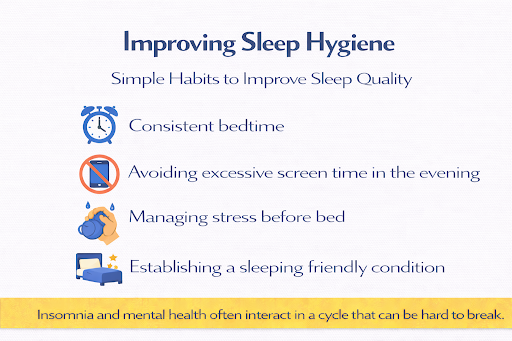
In order to be effective, medication should be used in combination with healthy sleep habits, including:
- Consistent bedtime
- Avoiding excessive screen time in the evening.
- Managing stress before bed
- Establishing a sleeping friendly condition.
Ambien helps in sleeping, but it does not substitute such habits.
What to Discuss With Your Doctor Before Taking Ambien
Patients should discuss:
- Their sleep pattern and length.
- Stress or anxiety levels
- Other supplements or drugs.
- Work hour and duties.
- Previous experiences of sleep aid.
Effective communication enhances safety and results.
Buy Ambien Online
In case a licensed healthcare professional prescribed Ambien, it is convenient and has a degree of privacy when the patient orders it on an online pharmacy.
An online pharmacy should guarantee:
- Genuine medication
- Secure checkout
- Discreet delivery
- Regulatory compliance
Patients are not to use unverified sources.
In case Ambien is dictated in order to take care of your sleep disorder, then order medication and be safe through a reliable online drugstore. Secure sourcing, discrete delivery and quality service in USA.
A Practical Takeaway
Ambien is not concerned with getting rid of sleeping troubles. It is concerned with assisting the body to take a rest when natural sleep processes are not functioning correctly.
Ambien can be used as a supplement to sleep and enhance day activity when prescribed and used properly. Knowing its mechanism will enable patients to use it in a safe and larger approach in regards to long-term sleep health.