
What Is Ritalin and How Doctors use It

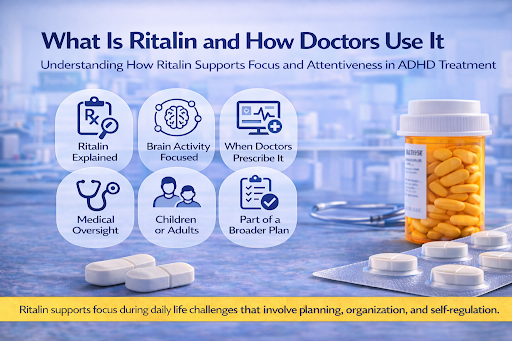
Ritalin is commonly referred to as a focus or attention drug and in association with ADHD. However, the name does not make sense to many individuals who hear it because they do not know when physicians prescribe it, why it is useful with some patients, and why they should not use it with all patients. Ritalin is no shortcut to productivity. It is a therapy that is administered in cases where the symptoms that just cause attention are a major problem in life.
This paper clarifies factors such as the definition of Ritalin, mode of action, and the ways doctors determine when to prescribe this drug as a form of a systematic treatment strategy.
Understanding Ritalin in Simple Terms
Ritalin brand medication is the product of the prescription drug methylphenidate which is a central nervous system stimulant. It is mainly prescribed to doctors to treat impaired attention regulation mainly the attention-deficit hyperactivity disorder also referred to as ADHD. It can also be applied in some instances of narcolepsy.
Ritalin is not overstimulating to the brain as it is labeled a stimulant, however, when taken in the right dosage. It also helps moderate the activity of the brain process and not to over stimulate it blindly in patients with ADHD.
How Doctors Define ADHD
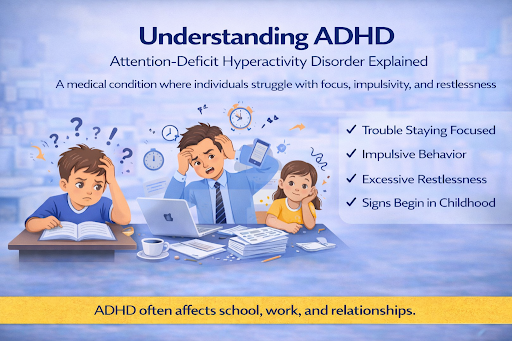
ADHD is not just the inability to concentrate, the restlessness. The diagnoses are made by doctors on patterns that are persistent and have an impact on various areas of life.
Symptoms may include:
- Impairment of attention maintenance.
- Tasking or relationship disruptive impulsivity.
- Difficulty in sorting out.
- Sensation of unrest or psychic agitation.
- Poor performance despite the work.
The doctors consider the consequences of these symptoms on school, employment, relationships, and daily duties and then contemplate medication.
How Ritalin Works in the Brain
Ritalin influences two neurotransmitters in the brain, norepinephrine and dopamine. These chemicals are involved in the focus, motivation and the control over the impulse.
These signaling pathways are not very efficient in ADHD. Ritalin serves to enhance the supply of dopamine and norepinephrine in certain parts of the brain that deal with concentration and self control.
Instead of accelerating the brain, Ritalin assists in filtering the information in the brain to a greater extent. This is why a lot of patients claim that they are more concentrated and have less noise in their heads.
Why a Stimulant Can Calm the Mind
This idea puzzles a lot of individuals.
The brain in ADHD does not have the ability to focus its attention continuously. Ritalin and other stimulants correct the process of signaling, which may result in calmed thought, enhanced task performance, and enhanced affect regulation.
Its effect is based on the proper diagnosis and dosing. In the absence of medical counsel, the medication may overstimulate, animate or cause discomfort.
When Doctors Prescribe Ritalin
Physicians prescribe Ritalin when:
- The symptoms of ADHD greatly interfere with everyday performance.
- Strategies of behavior are not enough.
- The impact is on academic or work performance.
- There is an absence of emotional control.
- Chronic attention struggles affect sleep and self-esteem.
Not all are immediately taken to medication. It is viewed as being included in a larger treatment plan.
Conditions Ritalin May Be Used For
Ritalin is normally prescribed to:
- Attention Deficit Hyperactivity Disorder in children, adolescents, and adults.
- Narcolepsy in select cases
It is not prescribed in the case of general fatigue, stress, and occasional difficulty in concentrating.
Immediate-Release vs Extended-Release Ritalin
There are various formulations of Ritalin.
- I.R. versions work fast and have a shorter duration of action. They can take several doses annually.
- The extended-release formulations offer better sustained symptom management during the day and necessitate fewer doses.
- Formulation is selected by the doctors, according to daily routines, patterns of symptoms and tolerance.
What Doctors Monitor During Treatment
The prescription of Ritalin does not stop with the prescription.
Doctors regularly monitor:
- Symptom improvement
- Side effects
- Sleep quality
- Appetite and weight
- Mood changes
- Blood pressure and pulse rate.
Modifications are usual particularly at the beginning of the treatment.
Common Side Effects Patients Should Know
Some side effects may occur in not all patients, and include:
- Decreased appetite
- Problems with falling asleep when late.
- Mild anxiety or jitteriness
- Headache
- Stomach discomfort
Majority of the side effects are dose dependent and respond to changes.
Ritalin and Sleep
Timing matters.
Ritalin has the potential to disrupt sleep when it is used too late during the day. To minimize this effect the doctors tend to prescribe morning or early afternoon dosage.
When the medication schedule is correct, improved daytime attention may result in improved nighttime sleep.
Ritalin and Emotional Control
Lots of patients observe changes other than focus.
Ritalin may help reduce:
- Emotional overwhelm
- Impulsive reactions
- Frustration linked to task failure
This emotional balance tends to enhance partnerships and self esteem.
Why Medical Supervision Is Essential
Ritalin is a controlled drug, and thus it should be closely supervised.
Medical follow up will guarantee:
- Correct diagnosis
- Appropriate dosing
- Early side effect identification.
- Prevention of misuse
Self-administering dosage or self-treating with Ritalin would be more dangerous and less effective.
Dependence and Responsible Use
Ritalin does not lead to addiction when it is administered properly in ADHD patients. Dependence may however be caused by misuse or unsupervised use.
The physicians minimize this threat by:
- Careful screening
- Regular follow-ups
- Clear treatment goals
Patient and provider responsibility Responsible use is a responsibility of the patient and the provider.
Ritalin in Adults
Adult ADHD is not taken into consideration.
The diagnosis of many adults comes after a few years of poor organization, attention, and productivity. Ritalin may be used in situations where the symptoms disrupt professional and work-related roles.
It is treated individually and commonly used in conjunction with behavioral measures.
Ritalin among children and adolescents
The doctors in younger patients put into consideration developmental factors, school demands, and family input.
Decisions regarding medication are made with close consultation with the parents or the caregivers and constant monitoring.
What to Discuss With Your Physician Before Ritalin Use
- Patients should discuss:
- Full medical history
- Other drugs and supplements.
- Sleep patterns
- Eating habits and weight issues.
- Mental health history
- Day to day routine and activities.
Effectiveness and safety are enhanced with open communication.
Ritalin as Part of a Broader Plan
Ritalin should be used in conjunction with:
- Structured routines
- Coaching or behavioral therapy.
- Sleep optimization
- Stress management
- Educational support
Medication supports focus. It is not a substitute of skill-building or lifestyle modifications.
Buying Ritalin Online
In case Ritalin is prescribed by a licensed medical professional, a few of the patients opt to contact a remote drugstore to save some time and get privacy.
A good pharmacy will offer:
- Genuine medication
- Secure ordering
- Discreet delivery
- Regulatory compliance
Patients are not to use unconfirmed sources.
Buy Ritalin Online
In case you have been prescribed Ritalin, you should place your order on a reputable online pharmacy. Secure sourcing, private check out and trustworthy delivery throughout the USA only at www.relivexusa.com