
Anxiety Hurts: Understanding Why Your Shoulders Are Screaming-And How to Finally Relax

Anxiety can feel overwhelming sometimes; let’s face it.
Picture this: It’s 3:00 PM on a Tuesday. You’re staring blankly at your computer, whether it’s some sort of never-ending spreadsheet or an e-mail thread that simply won’t quit. While the panic you may see in movies isn’t hitting you just yet, your body certainly is sending some distress signals. Your shoulders seem to be about two inches away from your ears, your jaw is clamped shut to the point of discomfort, and there’s a knot in your lower back that feels more like concrete than muscle.
Here’s the truth you’ve probably been told: “It’s all in your head.” As true as that may be, in many ways, it completely sidesteps the physical toll anxiety inflicts on us. In fact, anxiety can cause some very real, very painful discomfort, which might present itself as chronic tension, stiffness, and a sensation of bodily exhaustion that no amount of restorative stretching seems to assuage.
At RelivexUSA, we believe in more than just providing pills; we want to be your partners in healing. Today, let’s dive deeper into the connection between anxiety and physical pain, the role Valium (or Diazepam) can play in alleviating those muscle knots, and some effective natural techniques to help you relax.
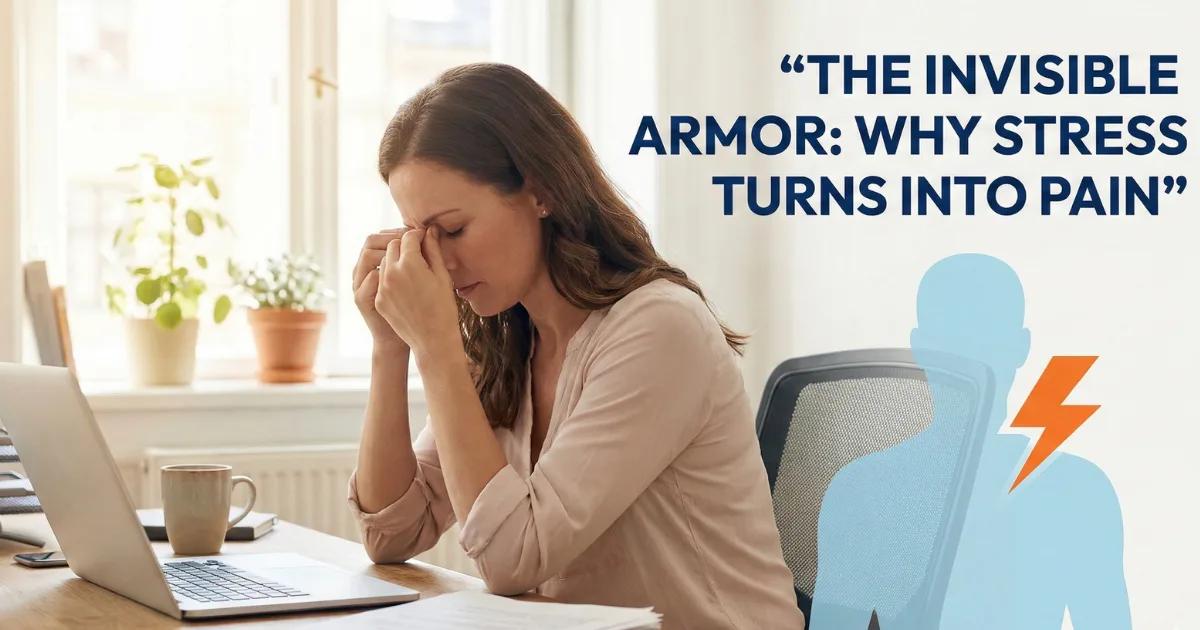
**The Invisible Armor: Why Stress Turns Into Pain **
First and foremost, it is necessary to acknowledge your pain-that it is real. You are not simply conjuring up notions of what it is you feel. When the brain registers stress-be it a looming deadline, financial pressures, or just the chaos of everyday life-it starts the “Fight or Flight” process. Adrenaline and cortisol flood your body, putting you on alert and ready for action.
In the past, this response prepared our ancestors for genuine threats, such as wild animals. However, in our current civilization, our “tiger” may merely be a traffic jam or an irritating coworker. The action involved in either running or fighting never occurs, so your muscles remain tense and contracted for extended periods. Possible results of this include:
– Tension Headaches: That frustrating band of pain encircling your forehead.
Bruxism: This is the grinding of teeth at night, often accompanied by a clicking jaw.
– The Anxiety Hunch: A tendency to roll your shoulders forward and protect your heart. This may result in painful upper back spasms.
If you’ve resorted to painkillers like Ibuprofen to try and alleviate back pain, and relied on herbal teas to try and alleviate anxiety, that may not have worked simply because you were dealing with the symptoms in pieces. True relief will only begin when you find what’s at the root of the Anxiety-Pain Loop.
Valium (Diazepam): the muscle-melting circuit breaker
The general view of Valium is as a sedative; it is so much more than that. Valium, or Diazepam, is an anti-anxiety medicine, also well known for its muscle-relaxing properties.
Think of it like this: Your nervous system is the house, but it has bad wiring. Anxiety overloads the electrical supply—lights blinking, kitchen appliances sparking, and wires (the nerves) smoldering. Valium acts like a circuit breaker, disrupting the panic so that it can’t continue to affect your body.
How Valium Works in a Nutshell
Your brain produces a neurotransmitter called GABA. This is your body’s natural way of maintaining calm. When anxiety kicks in, your GABA levels become overwhelmed. Valium steps in to help by binding to the GABA receptors and amplifying the calming signals in your brain. It’s not just about numbing the pain; it actively tells your muscles to relax.
Here’s what you can expect when Valium starts to work:
1. Mental chaos subsides; thoughts that had been racing shift to a more manageable rhythm.
2. You can actually feel your body begin to unwind. About 30 to 60 minutes after taking it, you may notice your shoulders unclenching and the tightening in your jaw starts to ease.
It doesn’t simply mask the discomfort; basically, Valium reassures your body that the threat has passed, permitting true relaxation.
**The RelivexUSA Strategy: Medications as Tools, Not Crutches
At RelivexUSA, our mission is to support your path to relief without creating dependency on medication. We view Valium as a useful tool meant to provide a window of opportunity. When you are in intense pain, it is often impossible to practice physical therapy or mediation. Valium opens up a ‘relief window’ of about four to six hours, during which your pain decreases and your mind relaxes.
But don’t waste this time. Use this window to recondition your body instead.
Your Natural Prescription: Progressive Muscle Relaxation (PMR)
We highly recommend combining your medication with a technique called Progressive Muscle Relaxation, or PMR. Why is this so important? The sensation of relaxation is unfamiliar to so many. You’ve been tense for so long, that tightness has become the norm. PMR will help you teach your brain the difference between tension and relaxation.

Try this simple routine about 45 minutes after taking Valium:
Here is the text we’re examining:
- Lie down: Find a quiet space, whether it’s your comfortable bed or a yoga mat.
- Your Feet Are Good Prey: Curl your toes down as tightly as you can for five seconds. Really feel that tension.
- Relief: Release, let go (suddenly) and exhale sharply. Feel the heat seep back into your feet.
- Move on up: Do the same for your calves, thighs and booty.
- **Engage your core:** Squeeze your stomach muscles firmly before letting go.
- **Shoulders** Focus on your shoulders: shrug up to your ears, clench hard, hold and drop. Let gravity pull them down.
- **End with Your Face:** Scrunch up your features tightly, hold, and finally let go.
You will be resetting your muscle tone through actively tensing and then relaxing. Doing this with Valium active enhances the process of relaxation, making the effects much deeper.
Remember, having feelings of anxiety along with their somatic pains is normal. With knowledge, medication when necessary, and mindfulness techniques, however, you certainly are in a better place to confront anxiety-related physical changes head-on. Take charge of your wellness movement today!
David is a 42-year-old graphic designer.
David came to RelivexUSA with complaints of chronic back pain. He had spent thousands on chiropractors and new office chairs; nothing helped for more than a day.
On closer examination, we found that David wasn’t hurting his back; he was stressing it. He held his breath while he worked and clenched his glutes as deadlines approached. His pain was real, but the source was anxiety.
The Protocol: David instituted a short course of Valium (Diazepam) for the acute exacerbation.
The Change: “The first time I took it, I realized I hadn’t taken a full, deep breath in months,” he told us. “My back didn’t just stop hurting; it felt like it finally unlocked.”
The Habit: David practiced the PMR technique during relief windows. Months later, he now uses the medication rarely. He learned to recognize tension before it became pain, and he learned to breathe through it.
Safety first: A message from your relief partner
Valium is powerful. It is to be respected.
Sleepiness: You may feel drowsy after using it. Don’t operate heavy machinery or drive until you understand how it will affect you.
• Short-Term Use: Benzodiazepines are most effective in short-term respite or occasional “rescue” doses for episodes of panic or spasm. Tolerance may result from daily, long-term use.
• Interaction: Never mix alcohol or narcotic pain medications with Valium. It could be dangerous.
At RelivexUSA, in addition to your medication, we make sure you receive the appropriate guide. We’re sending a safety protocol, rather than just a bottle.
Why Choose RelivexUSA?
You do have options. You can go to the major corporate pharmacies that treat you like an order number, or you can go to the “discount” sites and question if the meds are even real.
Or you can choose the partner who understands the pain.
At RelivexUSA:
1. We are real people: The American healthcare system is complex and slow. We’re fast, discreet, and reliable.
2. We Validate Your Pain: We don’t consider anxiety to be just “worrying.” Anxiety is back pain; it is jaw pain. It’s real.
3. We Deliver Solutions: Our goal isn’t to sell you pills forever. It’s to get you back to living your life.
Ready for Faster Relief?
Well, if you’re tired of those aches and pains every morning, tired of the tension headaches, and tired of that anxiety holding your body hostage, now is the time to break the cycle.
Shop our selection of anxiety and muscle relief solutions today, and get the help you need discreetly delivered to your doorstep.
Frequently Asked Questions (FAQ)
Q: Does Valium really work for back pain?
A: Yes, it does-if the back pain results either from muscle spasms or from high levels of stress that result in tension, Valium is great as a muscle relaxant.
Q: Is Diazepam the same as Valium?
A: Yes. Diazepam is the generic name of the active ingredient in Valium. They work exactly the same way.
Q: How quickly does it act?
A: An oral dose produces an “unlocking” sensation for most within 30 to 60 minutes.
Q: Will I need a prescription? A: Yes. We can guide you through the process to ensure you are treating your symptoms safely and legally.
Disclaimer: This is for informational purposes only and should not be considered medical advice. Always consult with a medical professional before initiating any new medications to ensure that doing so is safe considering your medical history.